Disruptive Innovation
How does a small up-and-coming company beat a large established one on its own turf? Through something Harvard Business School professor Clayton calls disruptive innovation.
Large companies often focus on sustaining innovation, through upgrading or introducing cool new features. But these innovations tend to be incremental and target the most demanding and profitable customers.
Disruptive innovations, on the other hand, usually start off as simpler, cheaper, and more convenient alternatives that target overlooked segments of the market. Over time, these innovations improve and eventually disrupt the established players.
Really, disruptors focus on solving problems and providing value, creating a better and better product over maximizing revenue. They can often be “pre-revenue”!
The only way for the large company to compete, is to:
- Create a separate division that is focused on creating a disruption of its own
- Ask: what job do consumers want to get done?
- Segment customers by job, not by product or market size
- Develop low-cost solutions!
Example
Steel mini-mills, which produced lower-quality steel at a lower cost, initially served markets that were unattractive to traditional steelmakers. Over time, mini-mills improved their technology and processes, eventually capturing a significant share of the market and disrupting established steel producers. They did this by producing sheet steel more efficiently and at a lower cost, allowing them to compete effectively even in higher-end markets.
source: The Explainer: How to Be a Disruptor
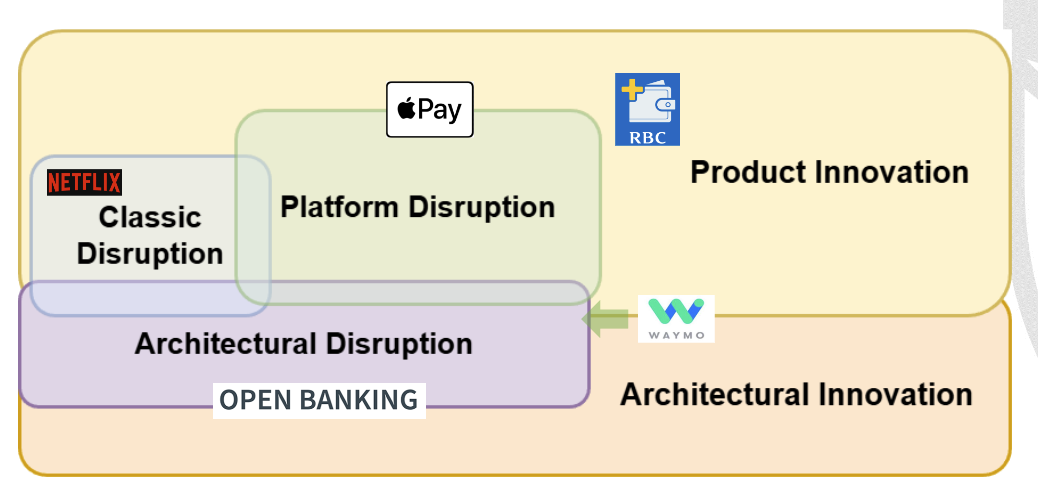
Types
Classic, platform, and architectural disruptions differ not in speed, but in what they disrupt: products, interaction patterns, or the underlying structure of competition.
Links to HBA1 LIT Course