HBA1 Term 2 Early Term Review
LIT
The great thing about LIT is that the slides are written in a lot of detail, and posted! Separate Distributions: Leveraging Information Technology.
As such, these notes will serve as a summary of the important key points. What do I consider important?
- Concepts and Definitions
- The approach to cases
- Contributions that the professor enjoys more
Session by Session Breakdown
Netflix Inc.
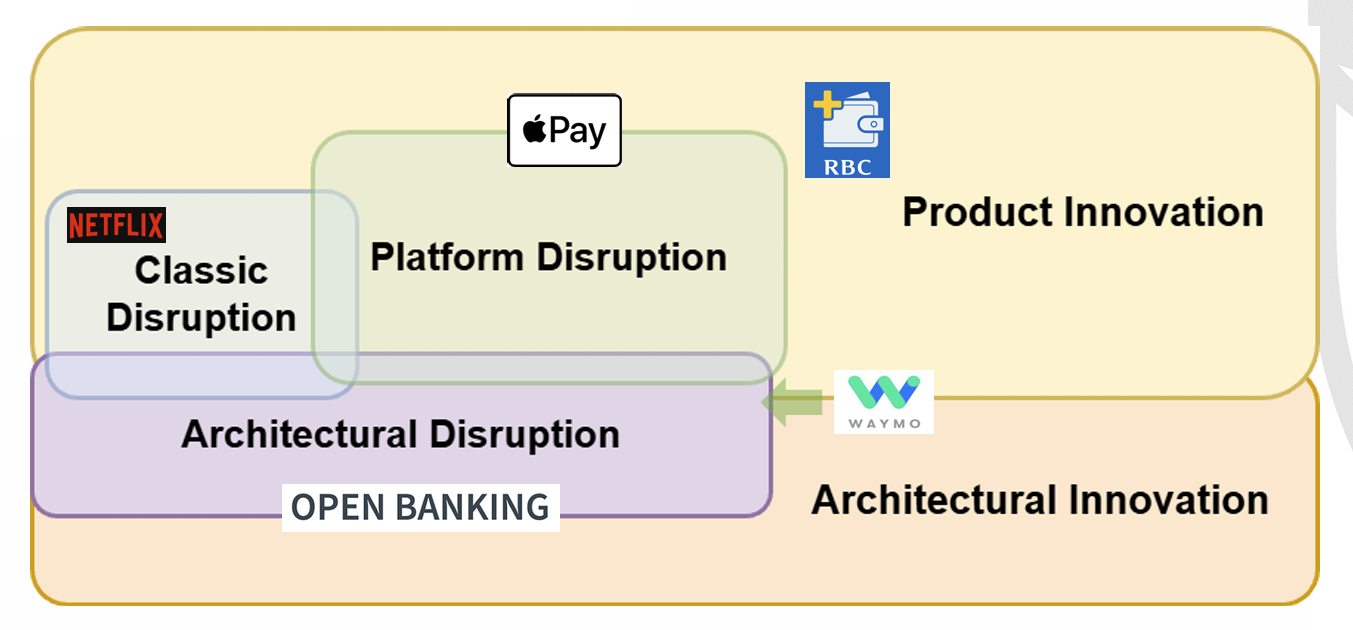
Here we learned about what disruptive innovation is along with the specific conditions for a classic disruption.
The case assignment questions were followed closely. Generally, while creative thoughts are appreciated, questions that truly move the class forward are decently structured and based on the concepts learned. More specifically, it’s useful to refer to these specific definitions which we learned in class.
RBC Mobile Wallet
Here, we formally defined what a platform is, and what a digital platform is.
We did so by creating a value chain and considering every actor that will change through this disruption. Then, we compared this against the formal definition of a platform disruption.
Basically, we looked at the value chain, and realized this isn’t even a disruption. This is simply innovation. No interactions changed, and it didn’t fit a classic disruption.
Google Car
Here, we essentially just asked the question “why would Google want to make self driving cars?” The answer came down to network effects.
Along with Network Effects, we learned three other important concepts:
Of the 3, you are most likely to see a winner-takes-most scenario
Open Banking
Here we learned what Open Banking is. As well, we classified open banking as a Architectural Disruption.
The main reasons are:
- Not a classic disruption
- No cheaper or inferior product attaching incumbents
- Banks recognize the potential for reshaping financial structures
- Not a platform disruption
- Open banking does not directly create a single, dominant platform
- Platform leaders or disruptions may emerge later on top of open banking
- An architectural disruption
- Reconfigures data ownership, interfaces (APIs), and control points
- Redistributes value and power across the financial ecosystem
- Changes how competition happens, not who exists
essentially, if it just becomes a better product, it’s classic. If it completely changes how things interact, it’s dominant. If it changes where and through whom things happen, it’s platform. Finally, if it changes how the system itself is built and put together, it’s architectural
The questions we ask a lot in these kinds of cases is, with whom does the power lie? And who has control.
Wendys
Here we learned about Multihoming. We also learned that there is no clear causal link between a marketing strategy and increase in sales or profits. So what do we do to figure out if it’s working?
Answer: conservative assumptions!
Wendy’s marketing is also an example of an Emergent Digital Strategy.
Finally, we learned that platform fit matters more than platform presence. That is, act differently on each platform, tailor to what the platform tailors too.
Digital Transformation at GE
Here we defined what a digital transformation is.
As well, we talked about how to overcome the Chicken & Egg Problem.
Siemens
So we didn’t learn much more technical stuff in this lecture, however, we talked about what makes digital transformation successful.
That is, successful digital transformation depends less on ambition and more on how deeply change is embedded in culture, structure, and everyday work.
Approach to Cases
It appears that case prep is pretty optional in this course. She has literally said “for those who have not read it, I want you to be included in conversation too, so…” Instead, knowing all the definitions from previous lectures seems the most relevant to contributing and being able to involve yourself in discussion.
If you’d like to prep the cases, every lecture has followed the assignment questions well.
Contribution Preference
So far, it seems the professor enjoys contribution which relates to previous concept definitions and brings out things in that context. Generally, when trying to move discussion forward, she wants someone to clearly explain some logic based on some definition, less so an experience (but that is still valuable).
Operations
Case Process
- Perform a Size-up of the company
- Cost - cost to produce because price we sell it at is dictated by the market
- Quality - always in relation to “Expectations”
- Flexibility - matching throughput to demand and predictability of production speed
- Delivery/Service
Then do math.
Contribution Preference
Unlike him, his contribution preference is pretty straight forward. That is, since operations is very quantitative. While qualitative contributions are still valued, he prefers contributions that involve calculations and numbers, and/or are logically.
Marketing
Case Process
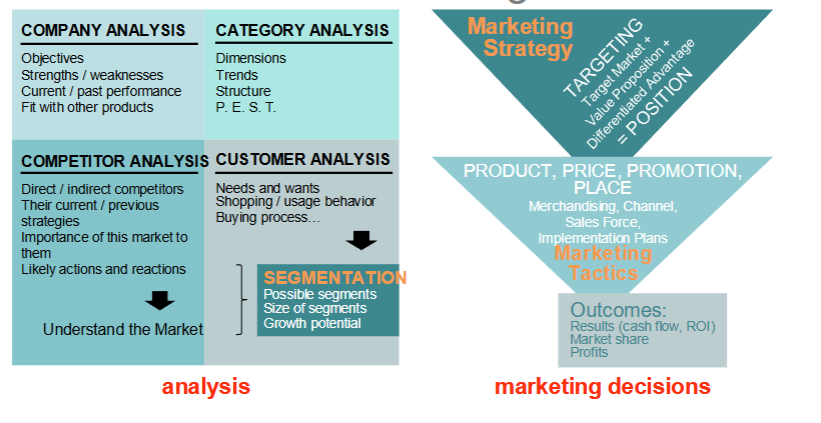
Our case process always follows:
- What is our goal?
- 4Cs Analysis
- Marketing Decision
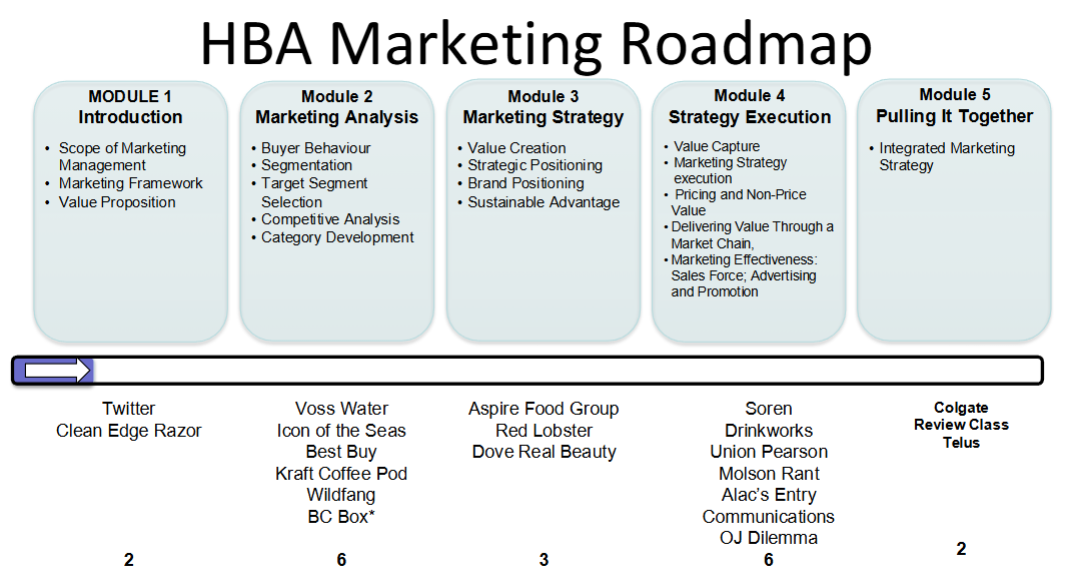
Generally, we do a subset of the marketing decision based on which part of the marketing roadmap we’re on. Additionally, the case lends itself very clearly to a subset of the 4Cs.
Concepts
Segmentation
Heterogeneity vs Homogeneity:
- heterogeneity: taking many segments which are very different and looking at them as a whole market.
- Homogeneity: taking a segment and looking at it as a whole.
Segments can be separated based on:
- Geography: Region, City, Density, Climate
- Sociodemographic: Age, Gender, Income, Race
- Psychographic: Lifestyle / Personality
- Behavioral: Purchase frequency, habits, usage occasions
And finally, segments need to be:
- Distinguishable
- Actionable
- Differentiable
- Measure of Profitability
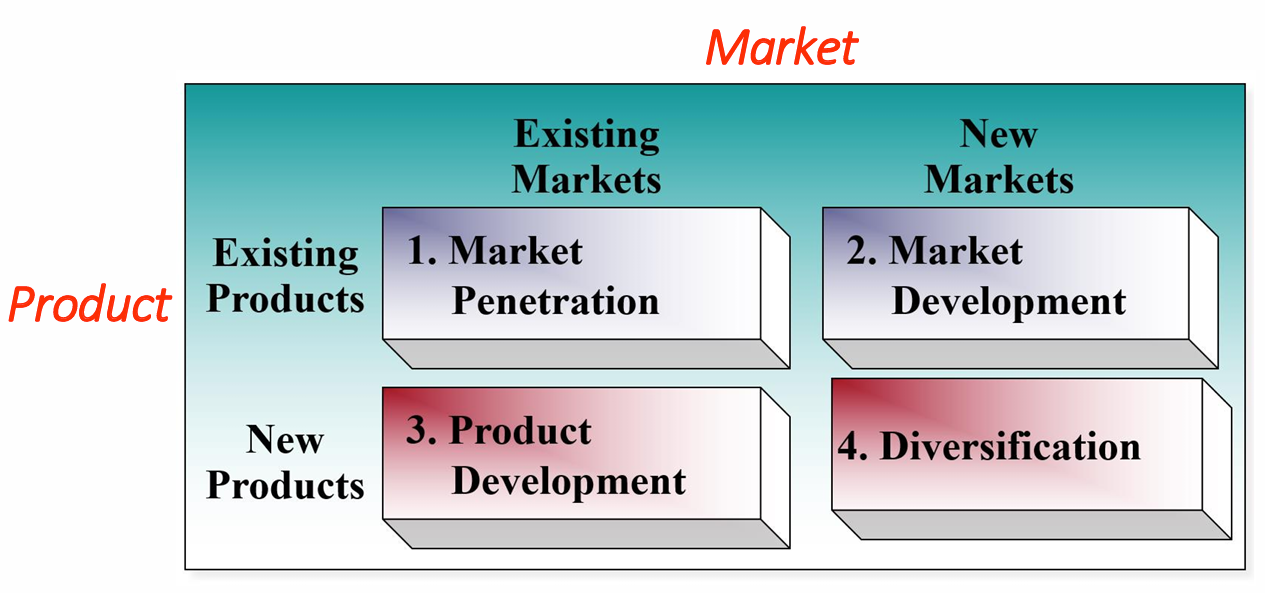
Expansion: Ansoff’s Matrix
Competitor Analysis
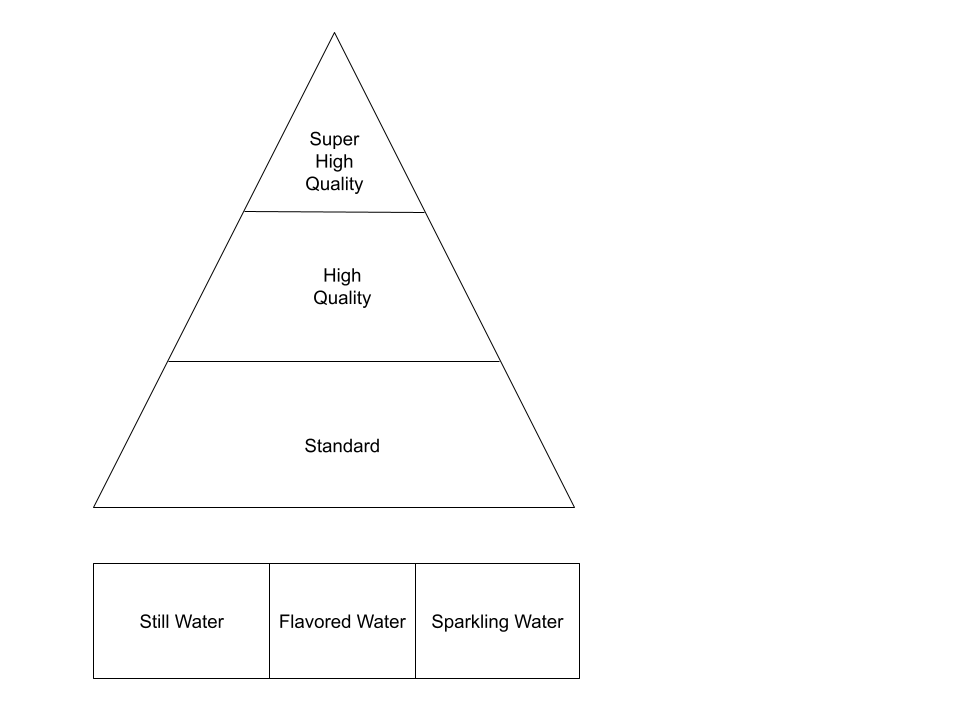
Consider the term Value Perception.
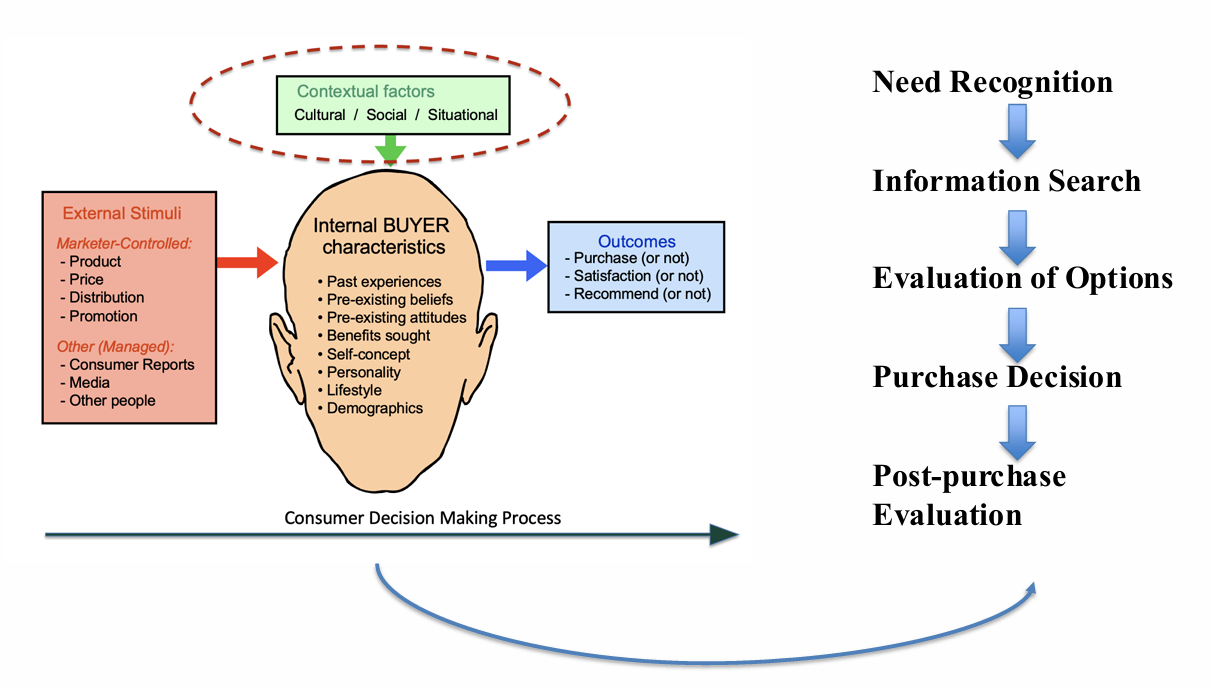
Consumer Analysis
Strategy
Concepts
- Diamond E Framework
- Roles of General Manager
- Value Stick
- PEST Analysis
- Porter’s 5 Forces
- Strategy Triangle
- Value Chain
- Value Chain Analysis (another one)
Case Process
The cases here are decently hard to predict. That is, most of the time we begin with some long discussion regarding the concept of value, or one of the case questions. Only after, we then apply the appropriate models from above. The benefit here, is that he really likes in-depth arguments. Refer to Toulmin’s Model.